
Prasat Hin Phimai, or simply Phimai for short, are the ruins of the old Khmer city and central temple complex known under the same name. The ruins of the temple are of particular interest as they are thought by some to be the model for the later Angkor Wat complex which in proportion seems to match the layout of the Phimai ruins well. The walled town is a rectangular structure with four gates in each f the cardinal directions, and the central temple complex resides neatly in the center. A large Baray or reservoir is situated to the south of the town, which was once surrounded with moats. The amount of construction highlight the significance of this Khmer city and temple.
The construction of Phimai commenced sometime i the 11th to 12th century with inscriptions showing massive renovations done in the 13th century. The orientation of Phimai is also a departure from other classical Khmer cities and temples, which face east. Phimai is oriented to face Southeast, in the direction of Angkor Thom. While there are many architectural structures remaining of the wall and Baray, I will focus on the heart of the city, the ruins of Prasat Hin Phimai.
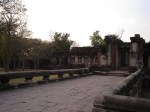
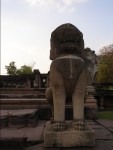
Remember that there is a foreigners price which differs from your in-laws, but the entrance fee of 100 Baht is really not worth raising a fuss about. The main temple complex is approached from the south, crossing the Naga Bridge which is a standard feature of Khmer temples of all forms. The bridge is made of sandstone guarded by two seven-headed naga, and two Chintae or stone lions adorn the foot of the stairs. The Naga Bridge is meant to represent the link between the human and heavenly realms in accordance to both Hindu and Buddhist cosmology.
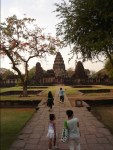
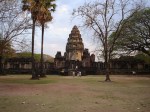
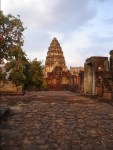
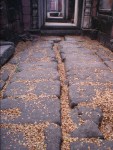
After crossing the Naga bridge, and passing through the arched gateway , through the compound boundary wall the inner temple area will come into view. While passing through the passageway before making your way to the courtyard, check out the base reliefs and carvings along the lintels. The inner compound is crossed by a platform in the typical shape of many inner courtyards of Khmer temples, leading to the main prang or Khmer style tower and inner sanctum buildings.
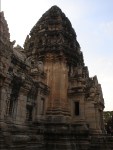
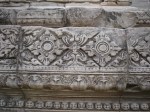
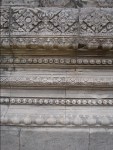
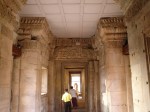
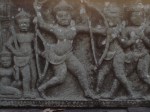
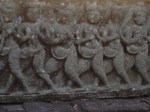
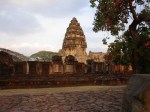
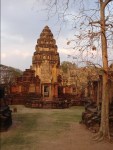
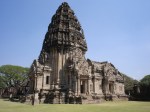
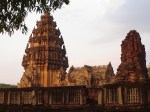
The main temple stands approximately 28 meters high, and is oriented to face the Khmer capital to the South East. The main structure is composed of white sandstone blocks, adorned with many carvings depicting various scenes likely from the epic Ramayana, such as victorious troops on the march with their captives, tax collection, and other scenes from day to day life during the Khmer Empire. There are three entrances to the main structure, an antechamber, and another enclosed space where the sacred image would have resided. Sadly the image is long gone, so we can only speculate as to its features. Elaborate floral motifs are carved on the interior walls as well.
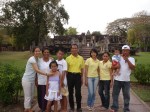
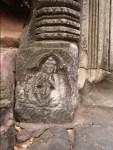
The entire complex is rather photogenic and after reaching the main tower, the search for the best camera angles begins. Its always a plus when a monk or his novices are also touring the ruins, as they add that old world flare many travelers seek, myself included. It adds a touch of authenticity to the site and makes for good pictures to send home. My personal collection of photos of Prasat Hin Phimai exceeds 800 individual pictures, so I was hard pressed to narrow it down to only a few. So I included a few of my favorites, but the selection is still not even touching all there is to see. So many finer details that are being neglected.
I learn a lot every visit, so there is a chance I will make future additions to this post. I highly recommend a trip to Phimai in any itinerary of North Eastern Thailand.
 Lost in Linklandiya
Leave a comment