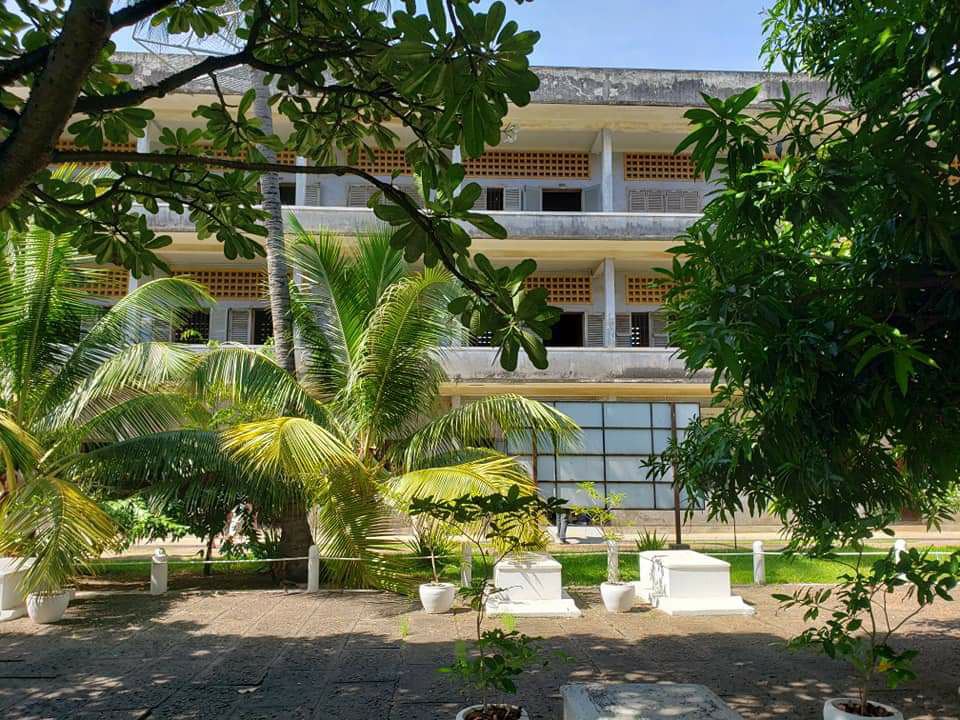
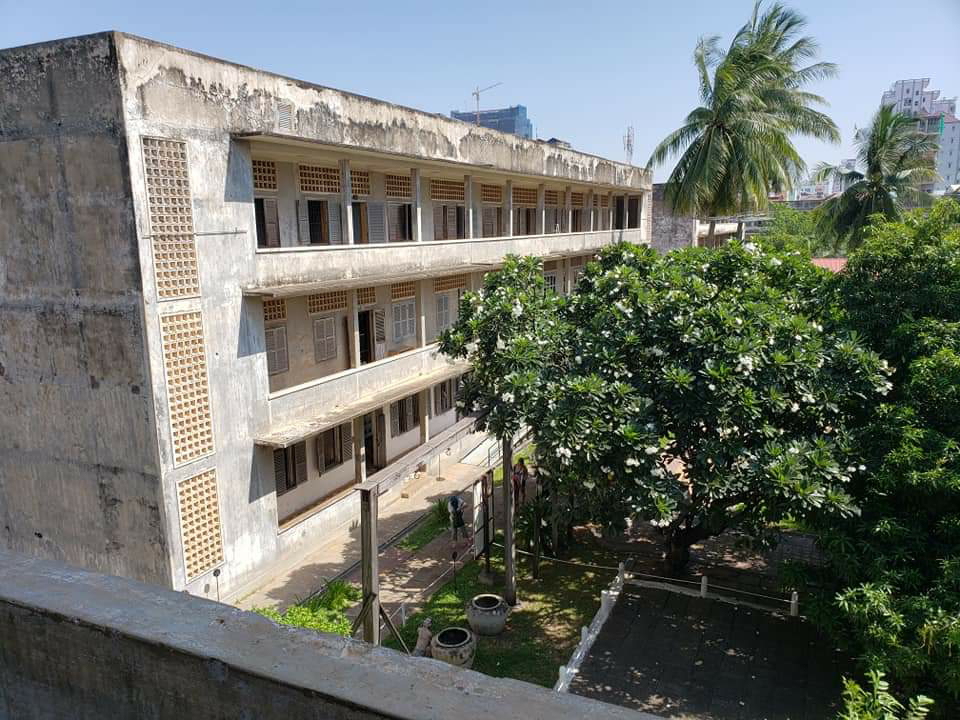
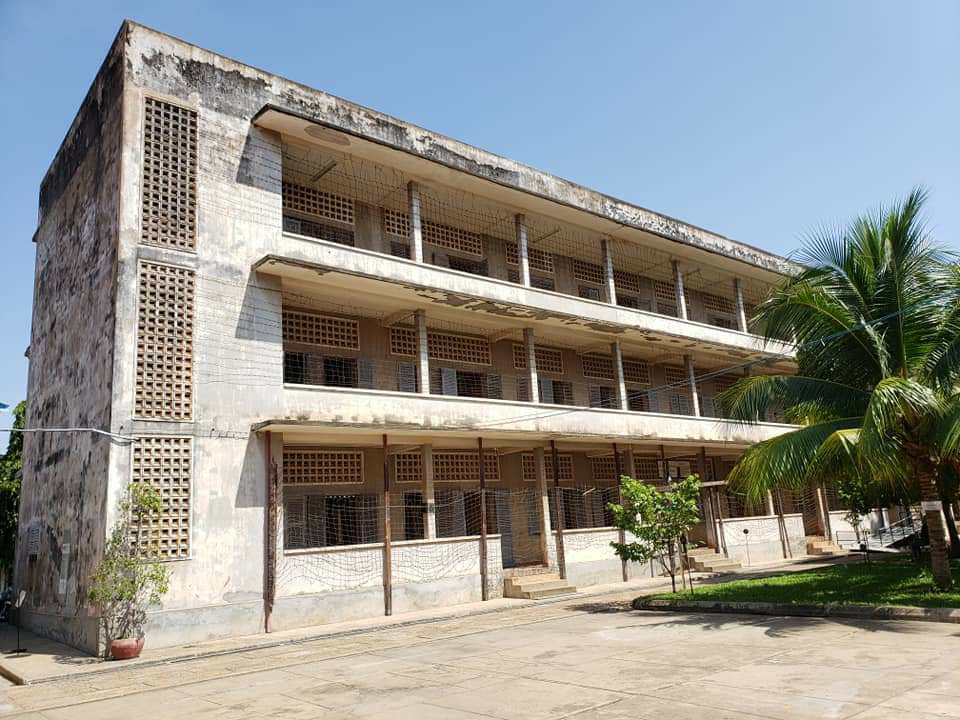
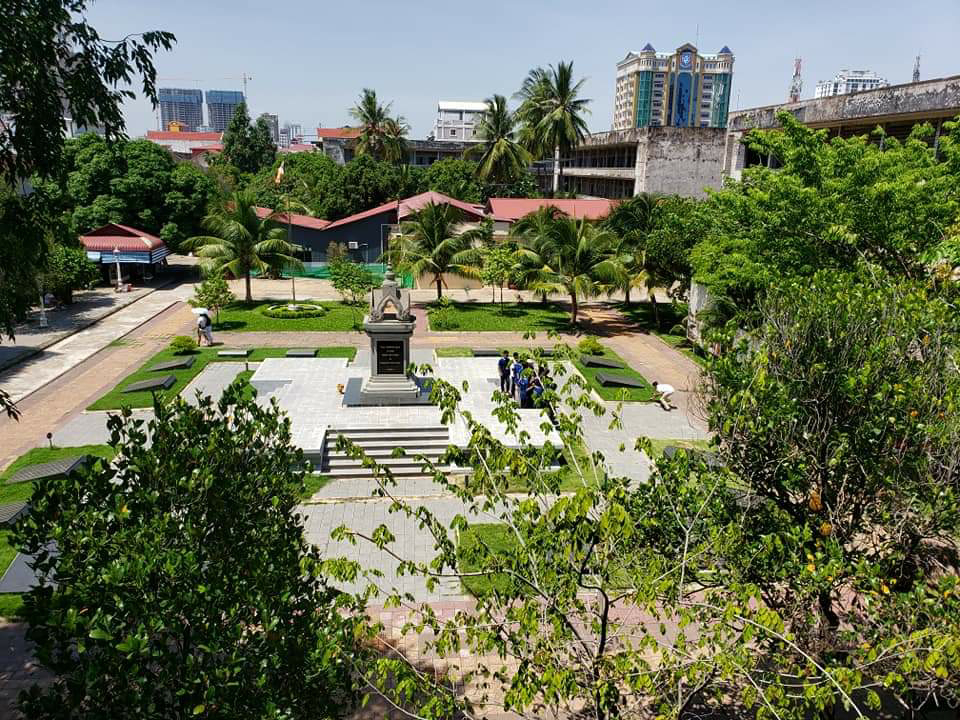
Building A, and the tombs for the prisoners, murdered before the prison site was abandoned by the Khmer Rouge, January 1979.
Tuol Sleng, perhaps better known as S-21, is truly a macabre travel destination. To those who are unaware of its significance, this is the Asian equivalent of Auschwitz, the infamous Nazi death and labor camp located in Poland. S-21 however has nothing to do with Nazi Germany, and in all my studies, I find it to be darker. S-21 is the detention center of the Khmer Rouge, the final point before torture and execution entirely on false pretenses. It’s as if the mass paranoia of the Salem Witch Trials, the delusions of one man, or a group of men, at the pinnacle of power lost all their faculties and entered into a pogrom against the innocent. So, why am I visiting such a macabre place? I suppose like many, we can’t tear our eyes away from the grotesque and macabre. It has its own pull and we desperately need to have this desired sated.
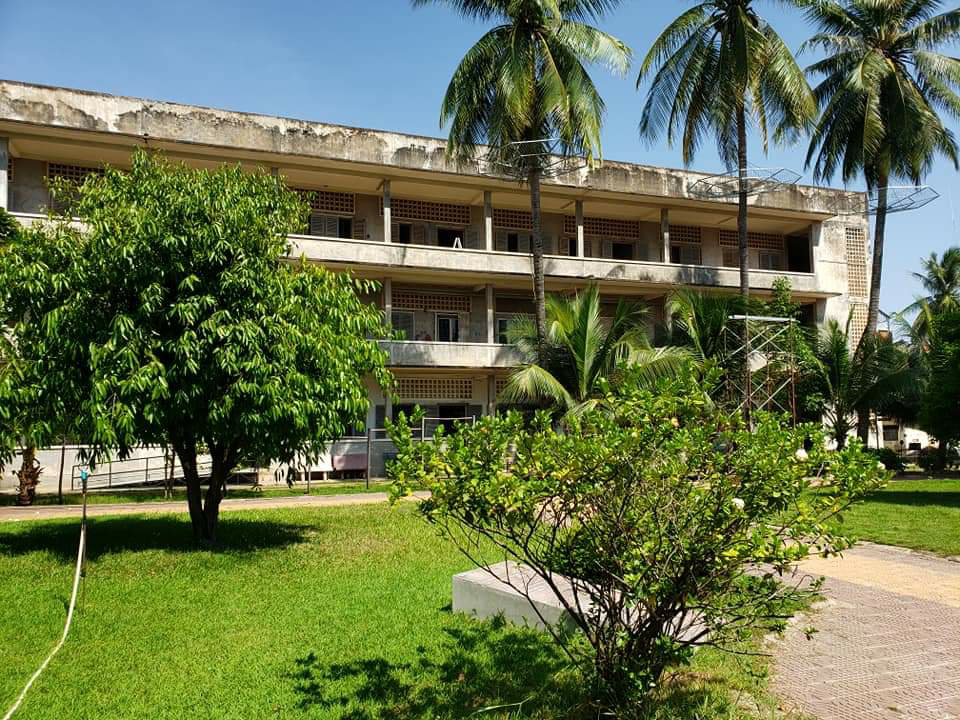
Building B, which currently houses the photo collection and several of the cells that held the detained cadres before interrogation in adjacent buildings.
I have been a student of South East Asian affairs since graduation from university in 2004. I have frequented the region but had not yet made it to Tuol Sleng. I first learned about the Khmer Rouge around the time that their atrocities from 1975-1979 were finally brought to light. It was during the 1990s when the Vietnamese were pulling out and the new government was being set up that I first learned of who the Khmer Rouge were, and what they had done. I was appalled that they could have murdered, starved, and executed so many of their own people, could be up to 2 million people, or 1/5 of the population.
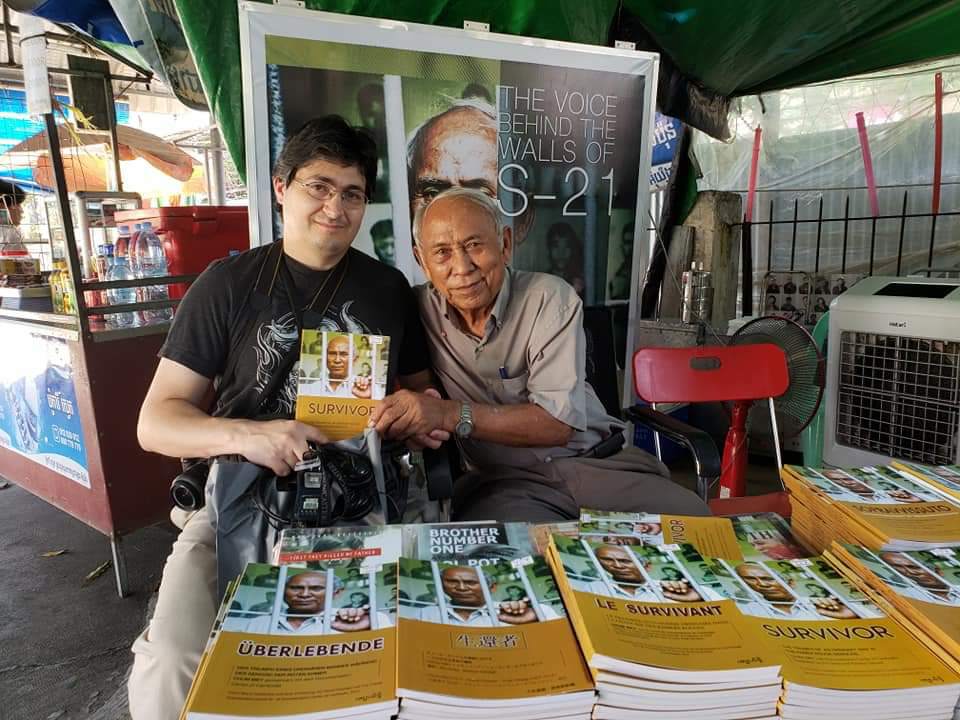
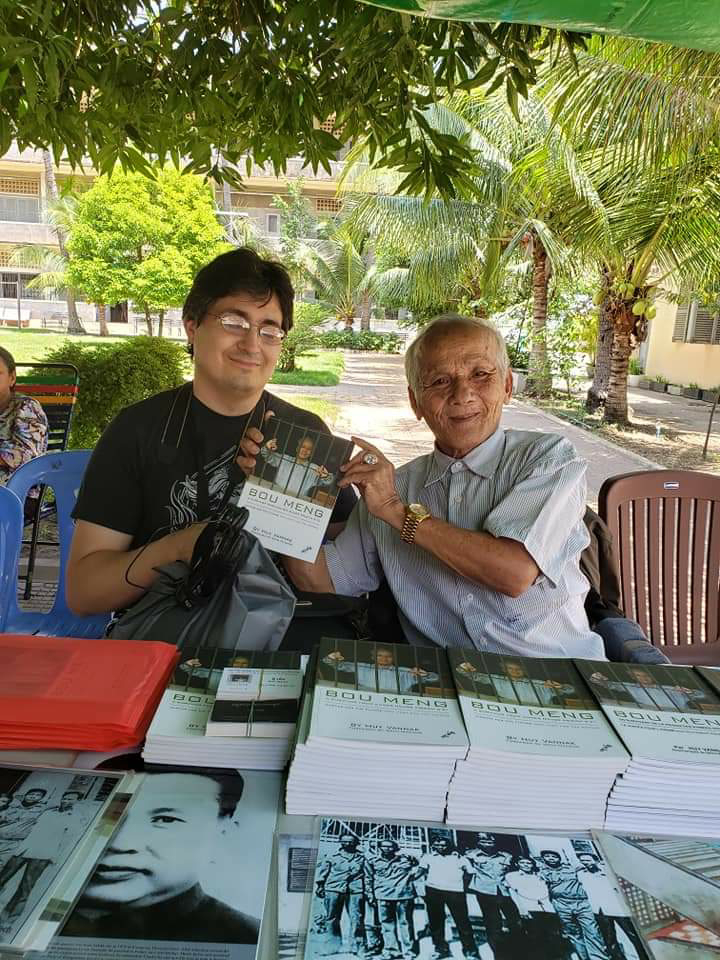
After the Vietnamese discovered the abandoned prison in January, 1979 it was decided to turn the site into a genocide museum. A pair of the very few survivors can still be seen, selling their biographies on the grounds of the prison. It is sad that this is their only income and they are both very courageous for returning to the site of their past torture on a daily basis.
Please do visit this place, if ever you make it to Phnom Pehn. There are also a number of books I recommend reading before planning a visit, as it helps build a lot of context that the audio tour left wanting. Voices from S-21, by David Chandler, The Gate, by François Bizot, which provides a little more information about Duck, but really sets the scene into what S-21 would be like, well before it was conceived. Cambodia 1975-1982, by Michael Vickery also devotes a good section of his book into Khmer Rouge torture, and Year Zero, by François Ponchaud.
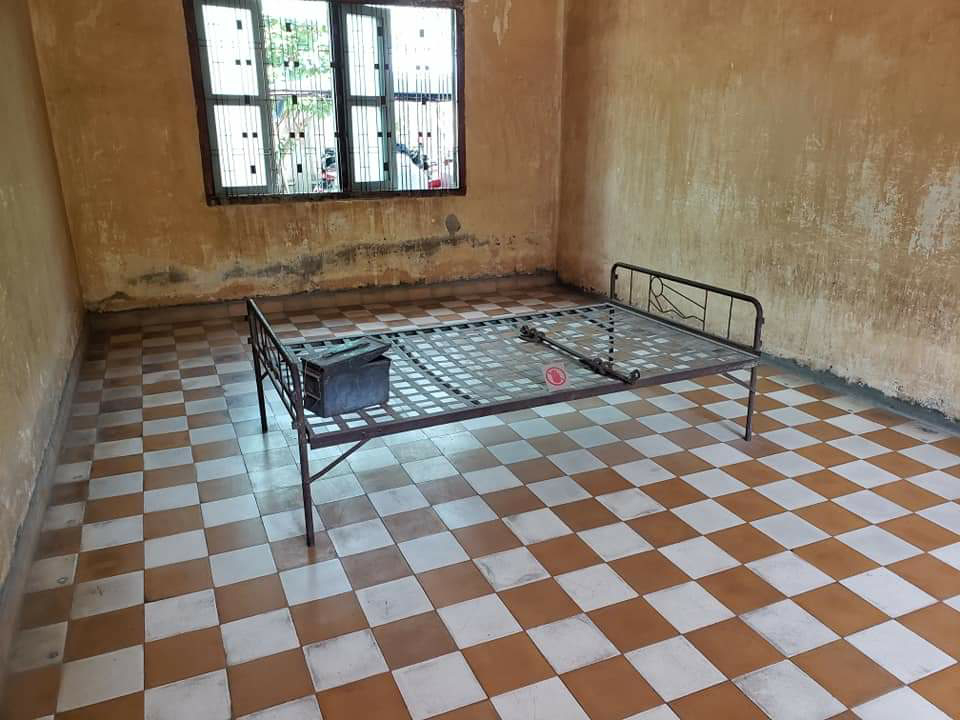
A bed, in a stripped down classroom is where many of the interrogations took place. Building A was were more of the torturing took place. The forced confessions were then filed away and the prisoner taken to the killing fields for execution and burial.
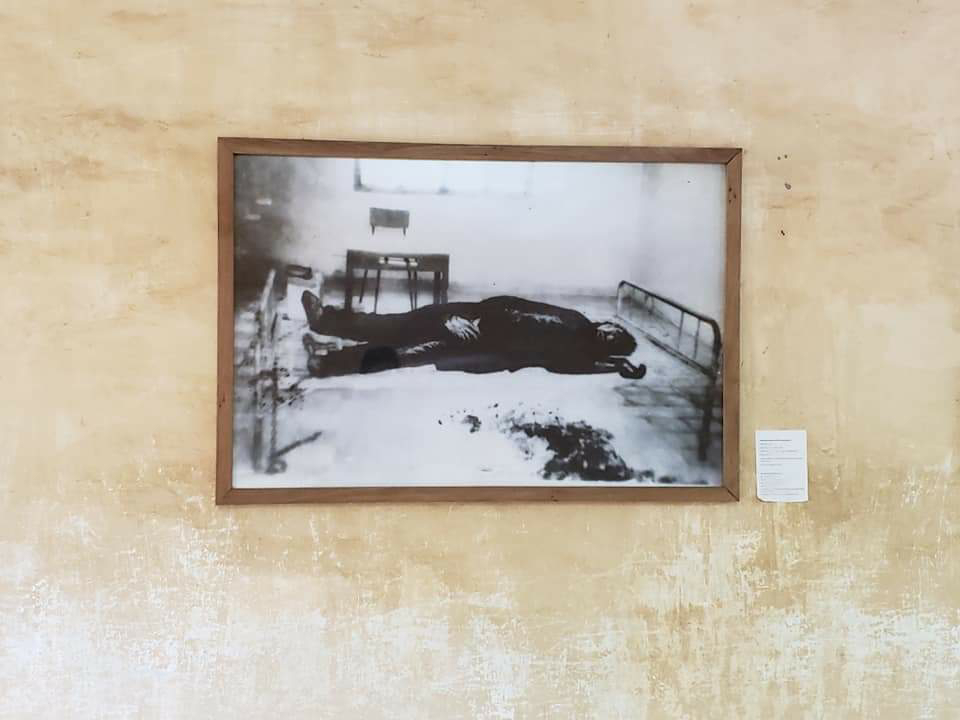
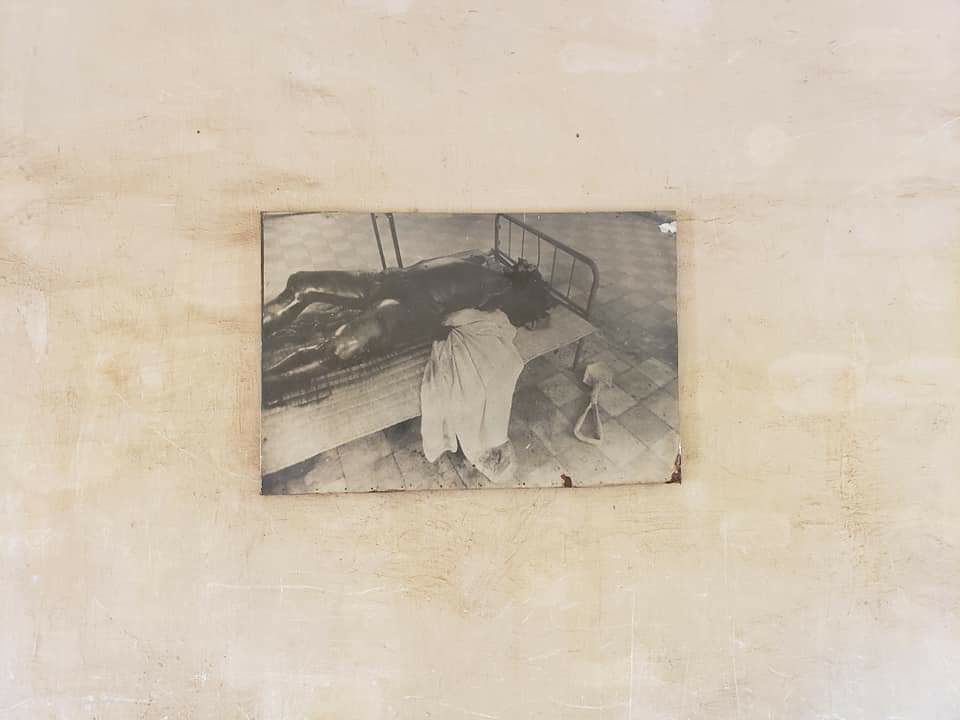
One of the final victims of the genocidal regime of the Khmer Rouge as discovered by Vietnamese forces after liberating the city of Phnom Penh.
Another another grisly scene documented by the Vietnamese upon liberation of Phnom Penh, S-21 Prison.
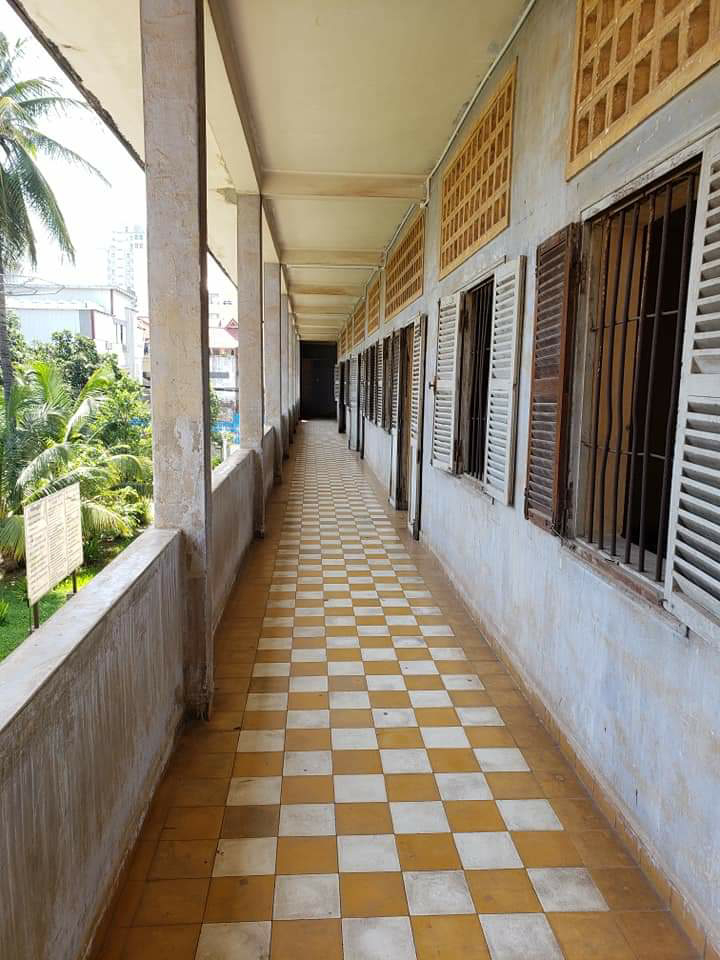
The unassuming open walkway, Tuol Sleng was a high school before the Khmer Rouge turned it into a detention center after they came to power. As a former teacher myself, felt haunted that such a sacred space was the scene of so much horror.
Looking out to Building Block B, and a portion of Building C can also be seen as well. Below, an tableau of a typical torture scene is played out.
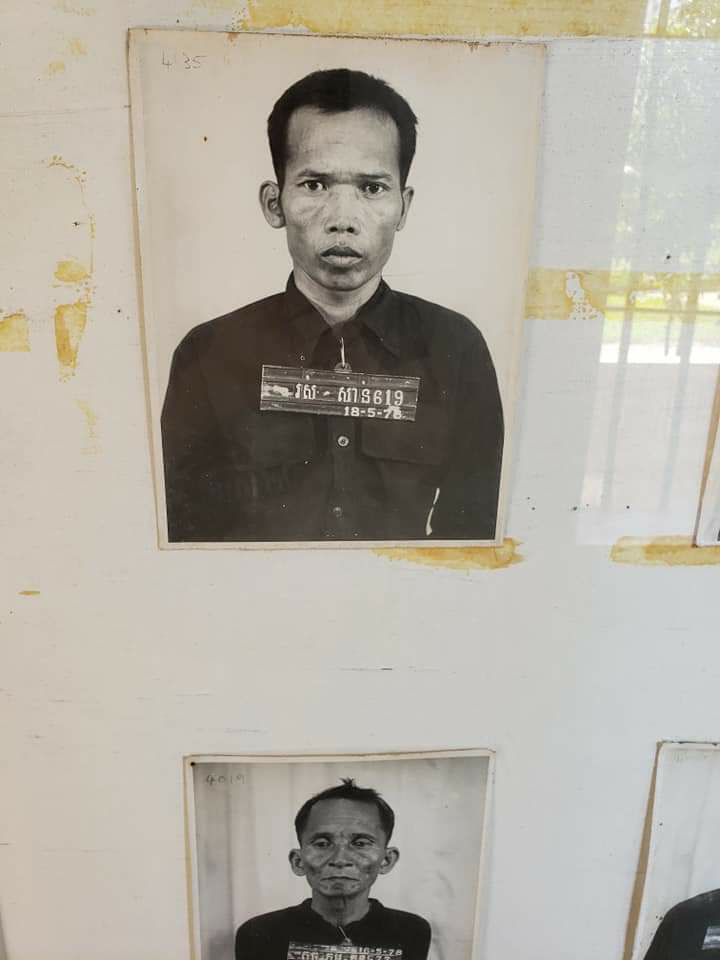
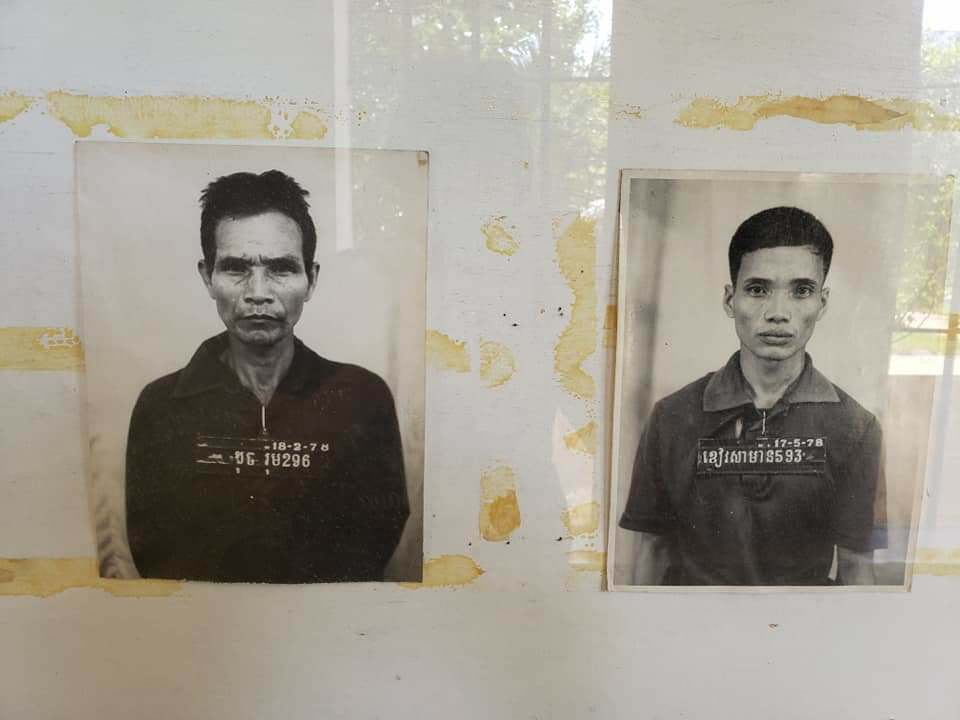
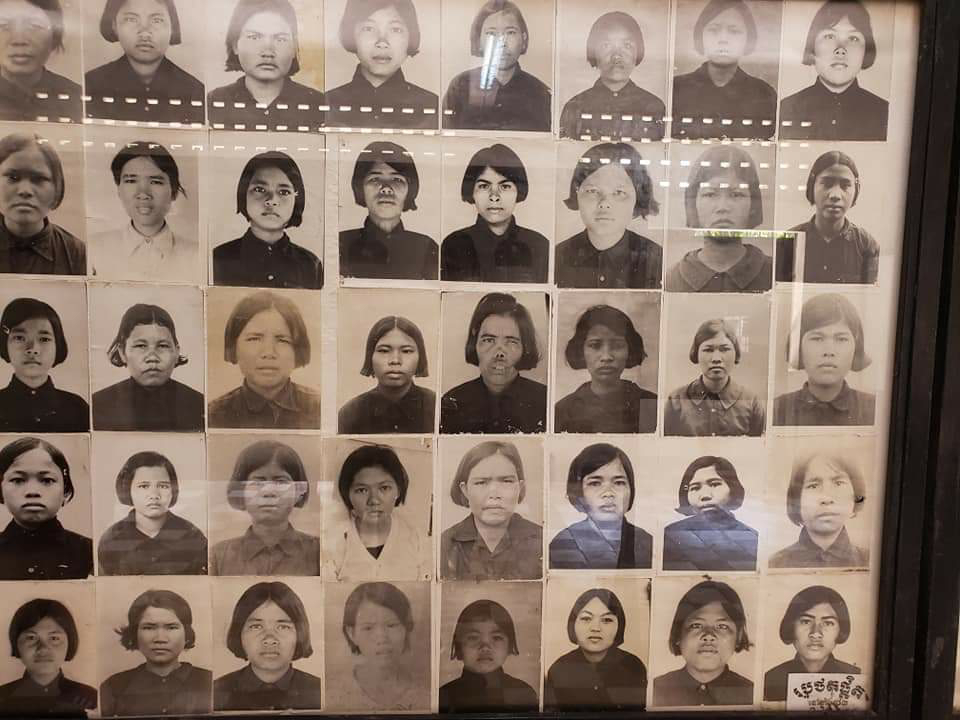
One of the many victims who were processed at S-21 by the Khmer Rouge.
S-21 specialized in detaining cadres of their own ranks, those who were deemed not loyal to the regime, which by 1977, had fully turned on it’s own rank and file.
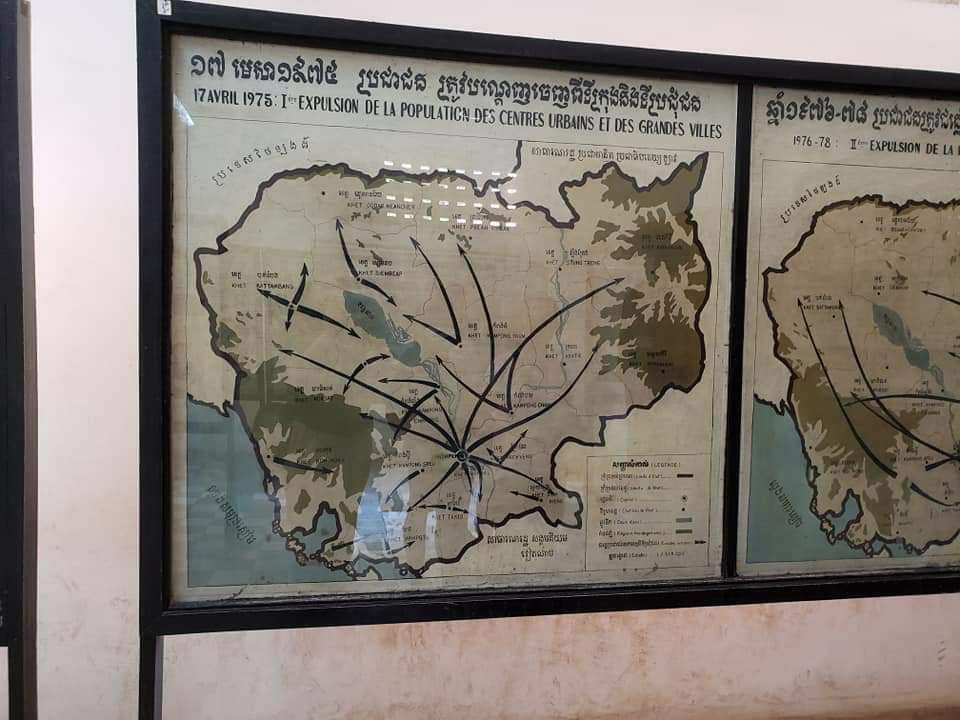
When the Khmer Rouge came to power, the cities were emptied and everyone was moved to the country side. The map shows how the majority of the population were moved out from the largest cities and into the countryside.
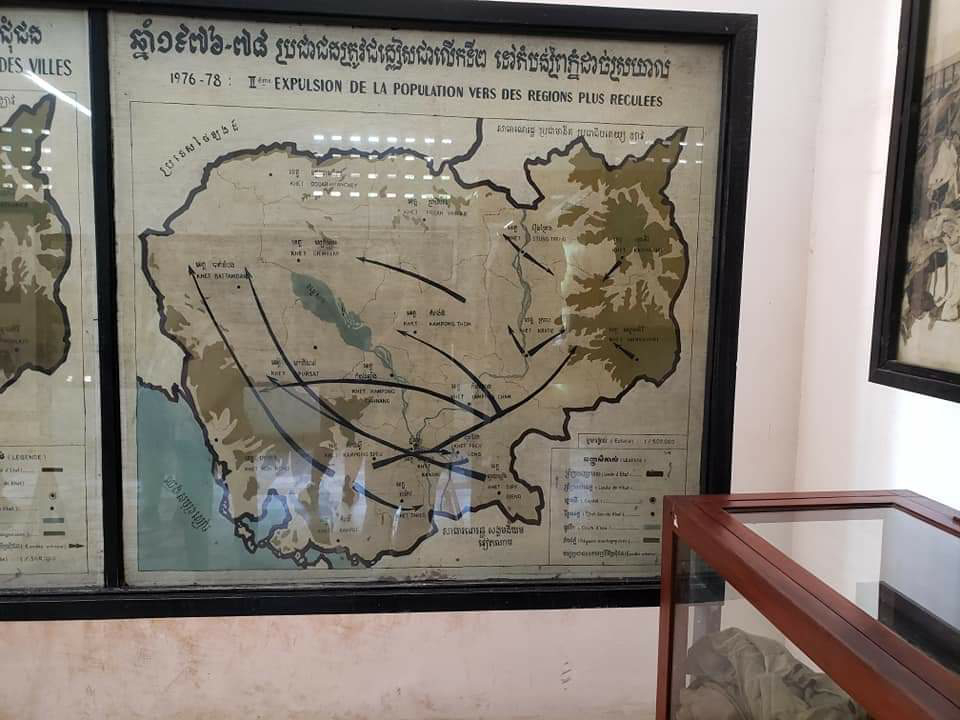
Further movement, and replacement as the population was dying off due to the harsh treatment from forced labor, starvation, disease, and execution. This was also a way to prevent powerbases of the disloyal cadre and moving them to unfamiliar territories.
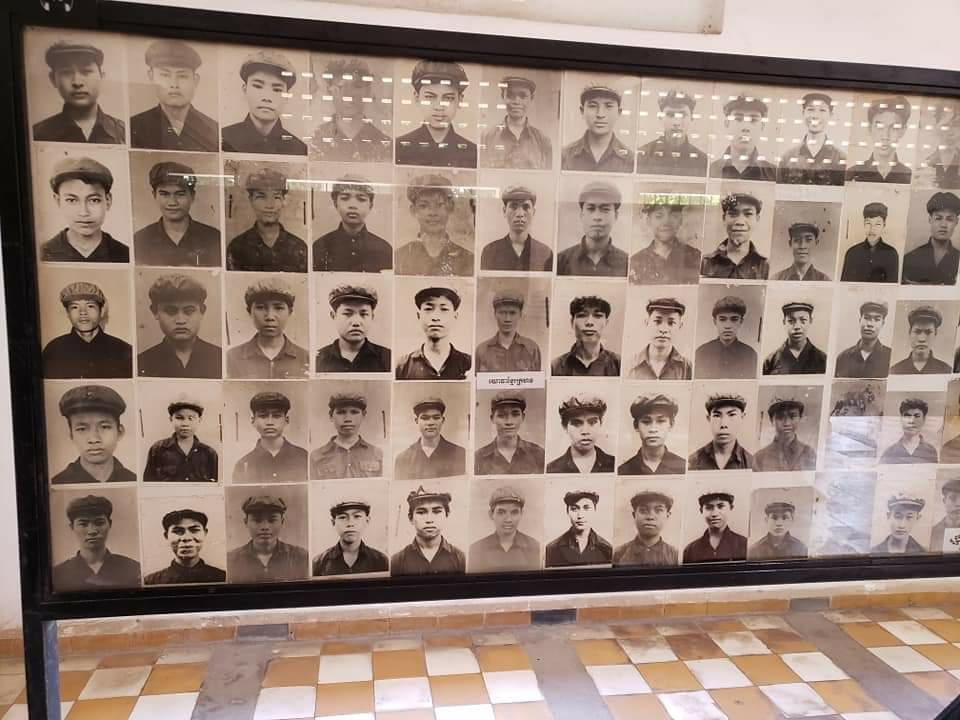
The average Khmer Rouge were young peasants. Most would never even be familiar with the things they would have been accused of.
Women and children were not spared, nearly everyone who was sent to S-21 was executed after having named more victims to the growing lists compiled by the interrogators trying to root out imaginary spies and traitors.
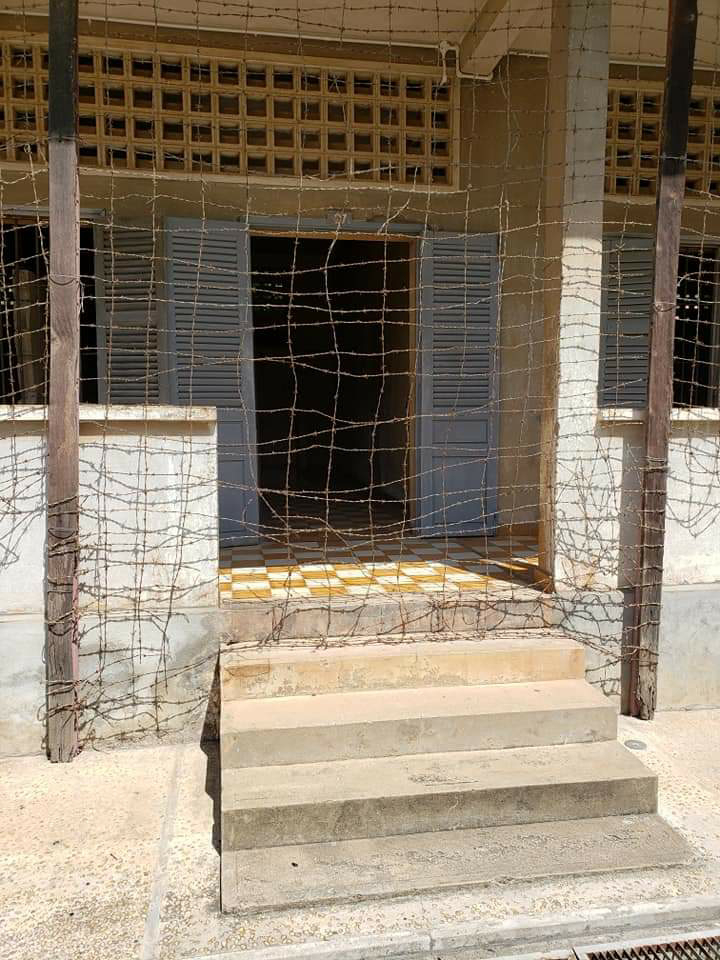
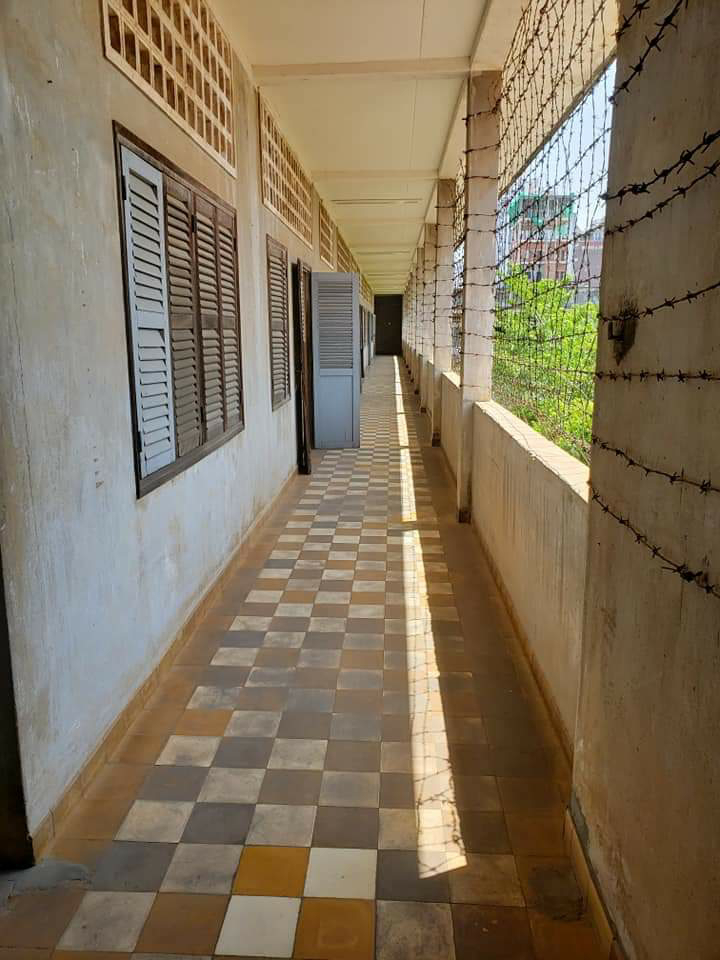
Building C, where most of the detention cells in Building B were more spacious, the cells in building C were much more confined. Also notice the barbed wire has been left in place by the museum. This was to prevent prisoners from escape and also to prevent the detainees from bolting over the sides in suicide attempts. A few were successful.
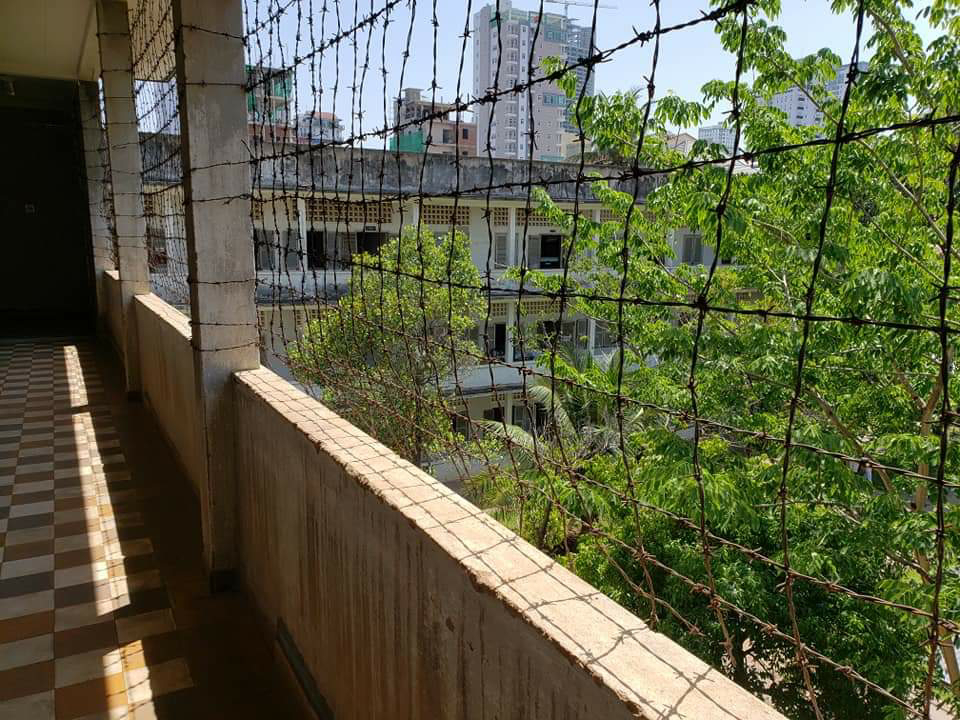
A close up of the barbed wire found on the outside of Building C. The sight of the barbed wire removes the happy charmed feel of the school and lays bare the horrors witnessed here.
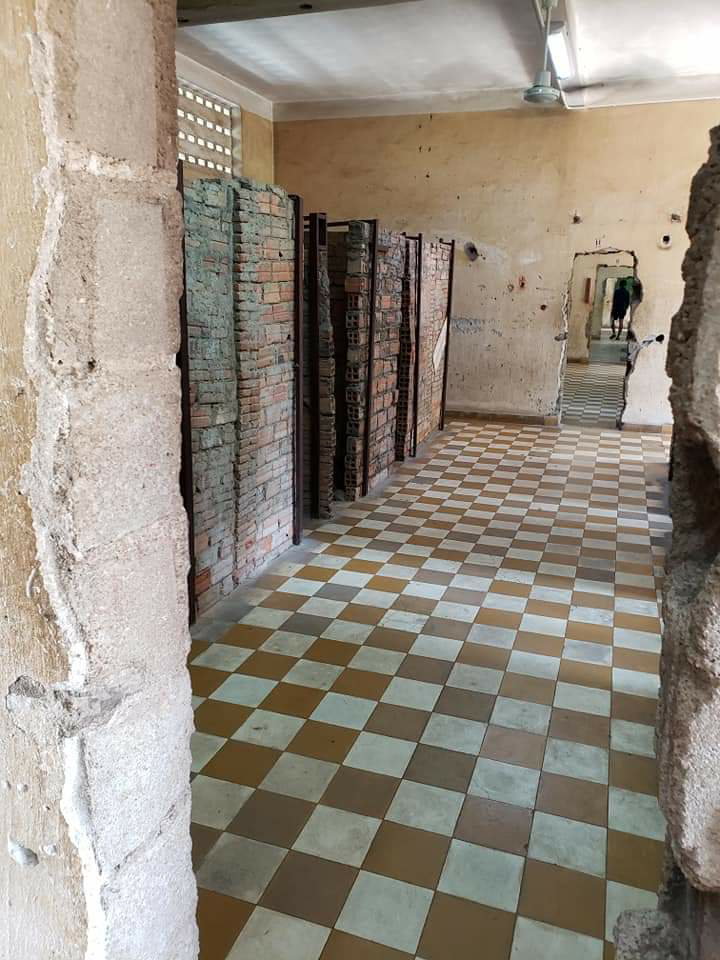
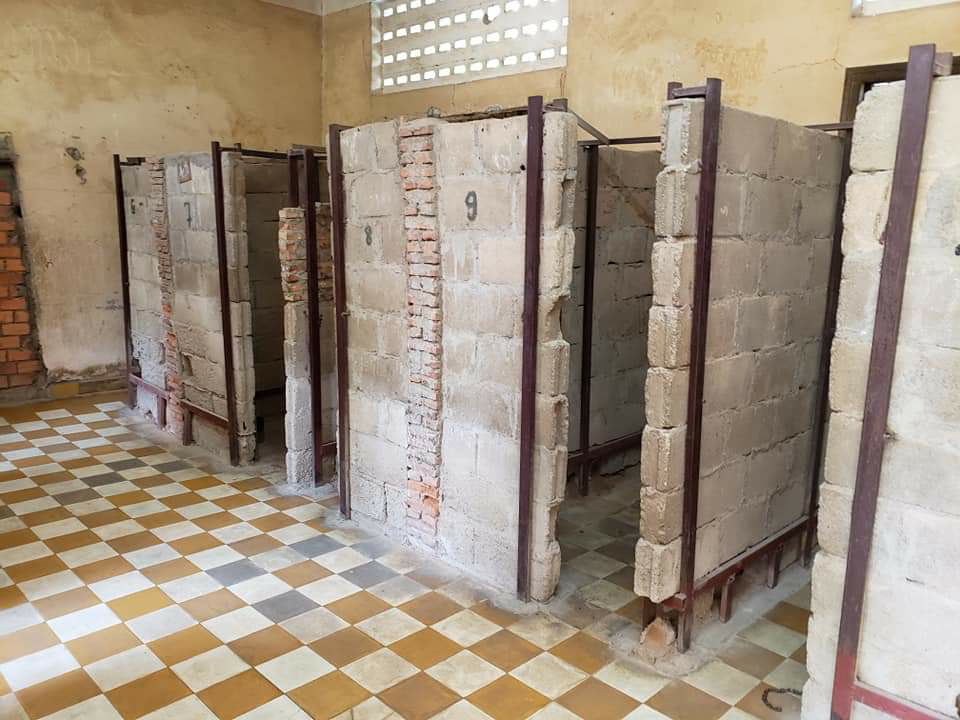
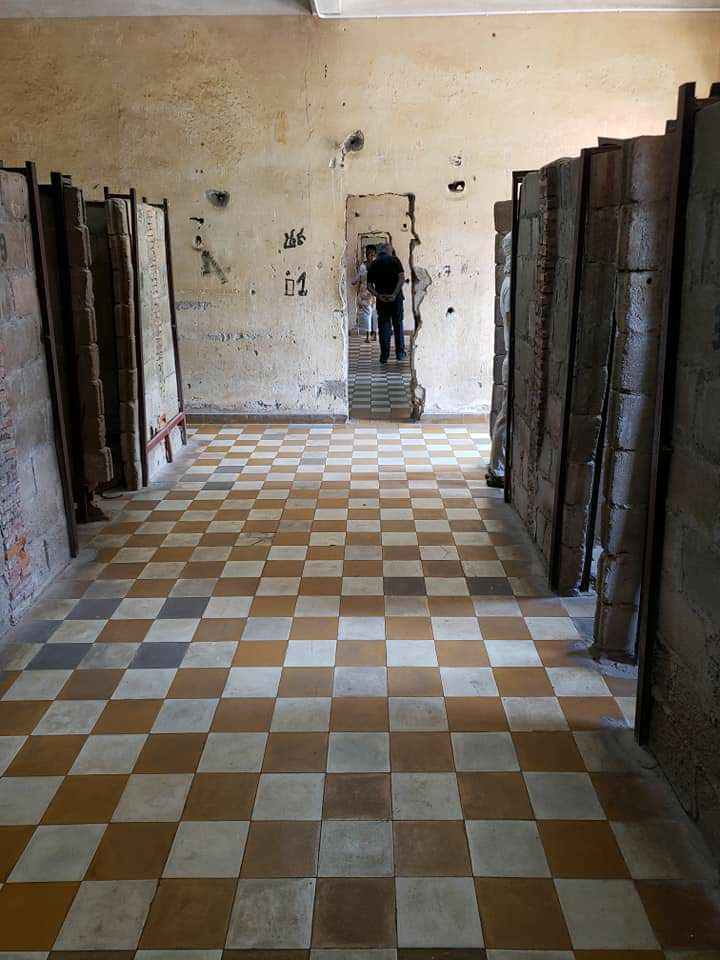
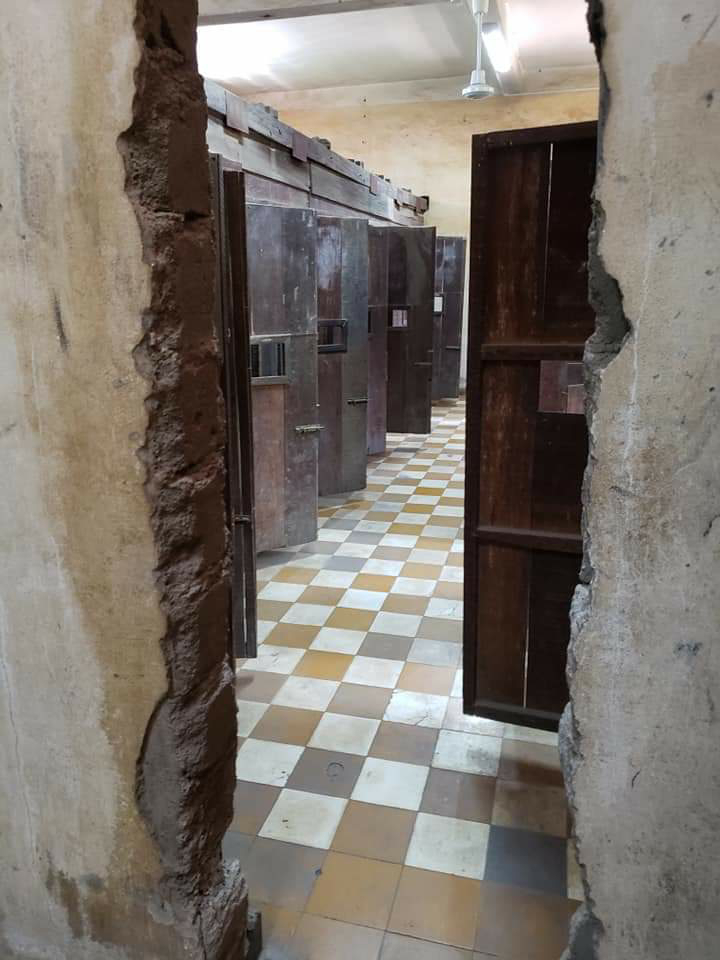
The walls of the classrooms were holed, to allow easy views for the detainees to be observed by their guards. Individual cells were built, haphazardly and barely allowed enough room for a single prisoner to lay flat on the floor.
Cinderblocks or basic red bricks were used to create the cells. The metal supports were added later by the museum to retain the shape and condition of the individual cells.
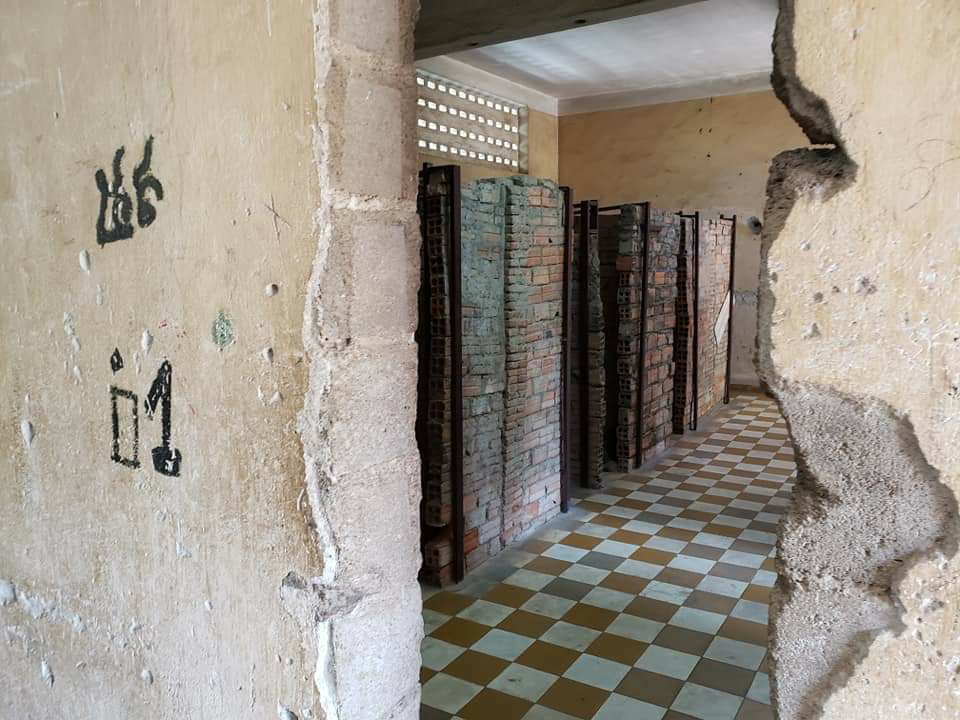
More detention cells. An entry way has been hacked through the original building wall.
The holed out walls connect each block with the next. This helped the guards to monitor the prison with only needing a minimal amount of guards to monitor.
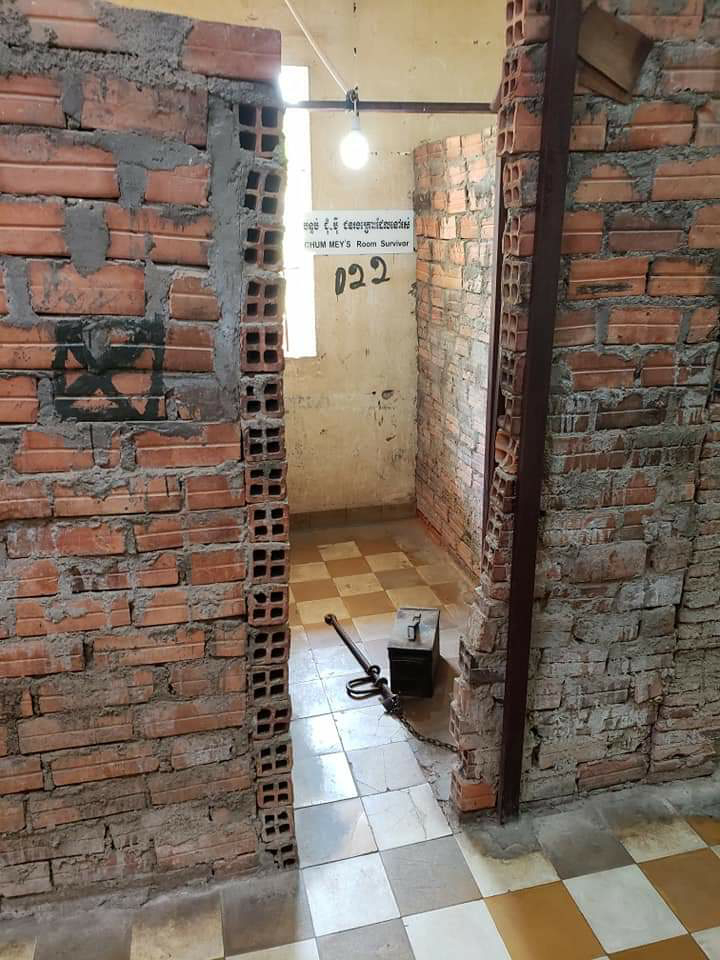
This is the holding cell of one of the handful of survivors, Chum Mey, an engineer who was spared execution because of his technical and machine skills were important for the camp. He can be seen later, signing his biography. To come back to the place of horrors just to eek out a living can’t be imagined, yet he and two other survivors do just that. I don’t know how they find the courage to return every day, but do buy their biographies, even if you have no intention of reading them, it goes a long way to supporting them.
These cells were better built, but offered little in way of improvement on space.
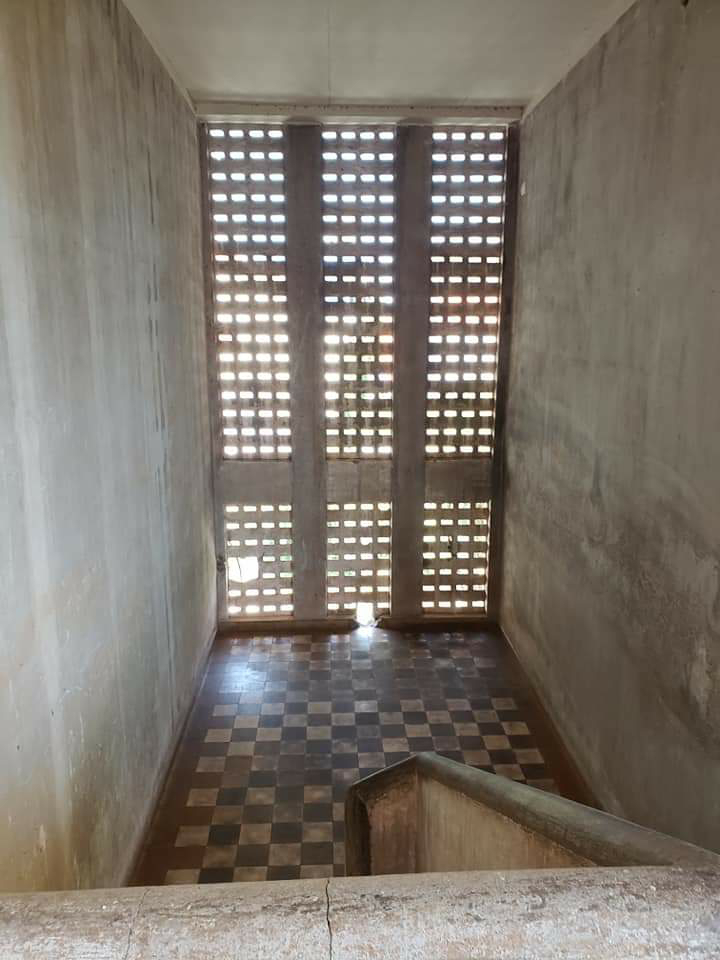
A reminder that this building was not designed as a prison. The open stairway and slats allowed air to move through and be cooled before assaulting passersby with hot wind.
The barbed wire here removes those peaceful vibes one may get when looking at Building A and B. Here, the passage runs along all three floors one can only imagine the scene of massed groups of prisoners being shuffled around.
Looking out past the barbed wire, Building D, which currently contains a few more dioramas and gift shop.
A simple memorial set up not long ago. May the victims of abuse from the Khmer Rouge never be forgotten.
Chum Mey, the engineer. One of the three survivors who wrote their biographies about their experiences here. They are simple and quick reads, but important if one wants to have a first hand account of their time detained by the Khmer Rouge.
Bou Meng, one of the other survivors out that day. Meng is an artist, who survived by making paintings and sketches from photos of Pol Pot. The courage and fortitude to return every day to this place. May we never forget the horrors of this place, too many had no voice, and to see them out reminding us, it forces us to remember the horrors of S-21.
I have never been to a place which has affected me so emotionally as Tuol Sleng, and it was soon surpassed in intensity by the Killing Fields of Choeung Ek. I was moved by the two survivors who must relive their own personal trauma and return day after day trying to eek out a living by selling their biographies. And they were the lucky ones. More than 12,000 Cambodians passed through the machinery of the system here at Tuol Sleng, only twelve were left to to give testimony to the horrors of this place. I visited Tuol Sleng in July of 2019, and one of the few members of the Khmer Rouge leadership charged for their crimes was Kang Kek Lew, better known to the outside world as Duch, the others were still slowly moving through the judicial system. Noun Chea would pass away that August 2019, and Duch would pass away in September of 2020. Khieu Samphan is currently serving his life sentence while the others appear to have their trials terminated or had passed away before the conclusions of their trials. Below are a few recommended sites or books to explore.

 Lost in Linklandiya
Leave a comment