Approaching the summit with the temple complex coming into full view. Phnom Bakheng rests atop a small hill, made to appear much larger by the trek in the heat.
The original entrance of the temple as built would have been straight up the now ruined stairway. A new and honestly gentler trek to the North side of these stairs, (right) leads to the temple on the summit.
When I was looking at a flat fold out map, it was hard to imagine that this temple is perched atop a small mountain, which became quickly apparent when I was at the base looking up and trying to muster courage to trek up the hill in my pear-shaped body in the brutal July heat.
Along the path to the Phnom Bakheng temple, another prang of a ruined temple peeks through the foliage. This is the ruins of Baksei Chamkrong, which can be reached, but not often visited and not generally part of the main tourist trek. The trail to this site starts at the base of the hill a little further to the North of Phnom Bakheng.
Another view of the central prang of Baksei Chamkrong.
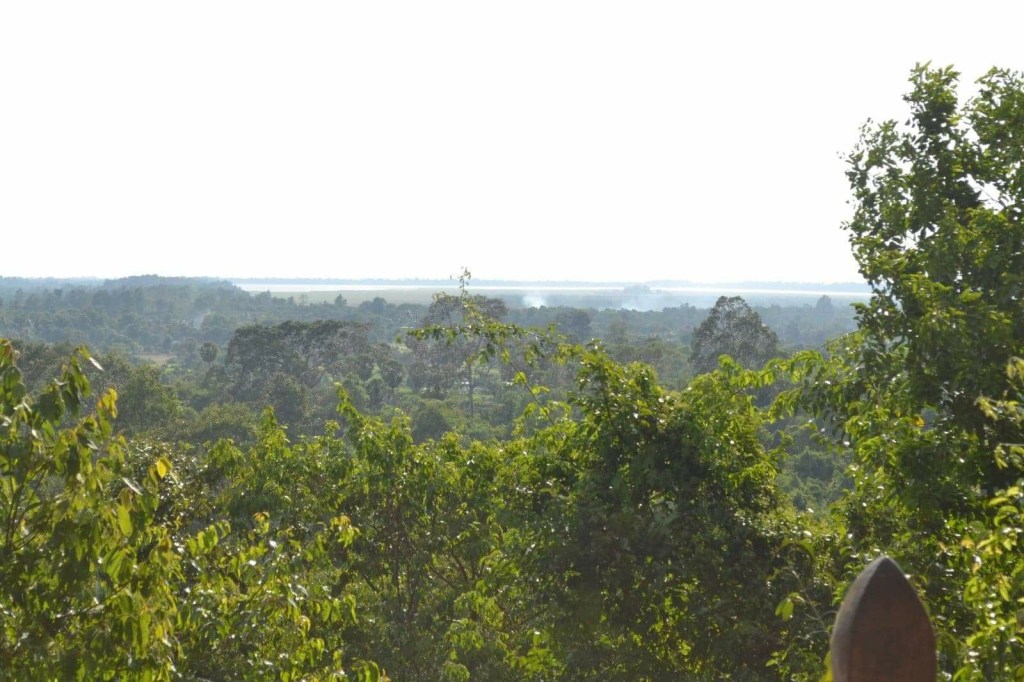
Further along up the trail, this time facing to the west, the West Baray. This is one of the several huge reservoirs which flanked the later built citadel of Angkor Thom.
Another view using the new lens I acquired before the trip. Still playing with it. My first field use of this lens.
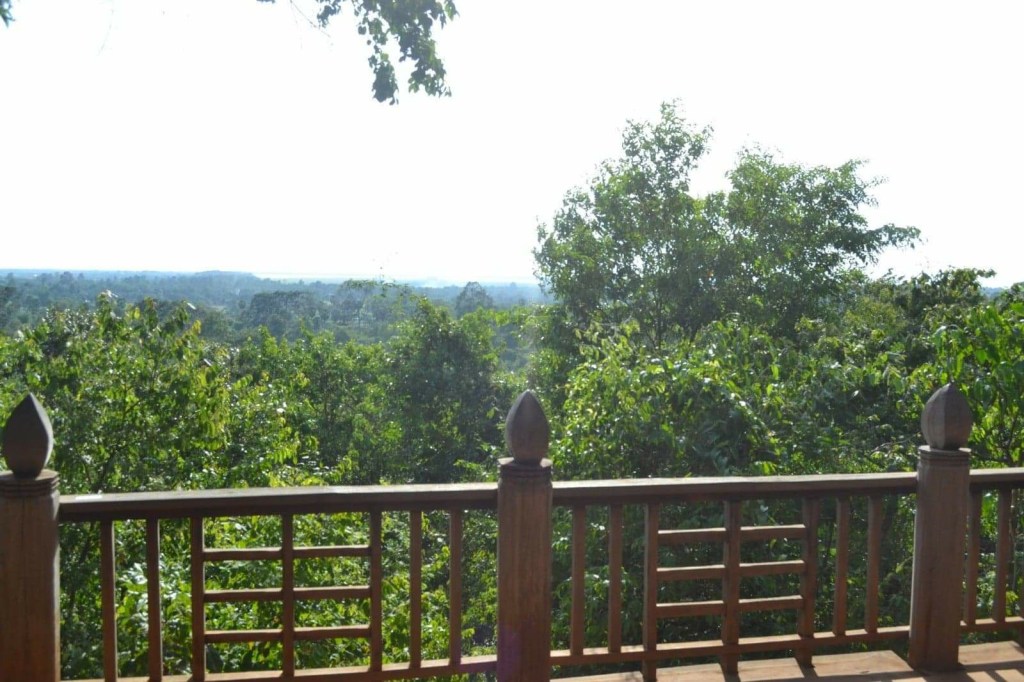
On the trek along the side of the hill, there is a small viewing platform which looks over towards the Western Baray, one of the large rectangular reservoirs which surround the later Angkor Thom site. This spot also makes a good place to take a break along the pathway and filling up on some iced water as well as provide some excellent views of the plain below. If I was in better shape (not pear-shaped) I could have probably continued trekking on without further pause.
Phnom Bakheng
This is a rather stately appearance of Phnom Bakheng, the first grand temple built in the region that was to be the new capital of the Khmer empire for the next 500 years.
I was using two different cameras on this trip, this is with the Nikon, a superior camera to my Sony, but I had not fully explored its full potential.
The main tower core, built on several steep stepped platforms. The temple shares several characteristics of the Bakong temple of the Roluos Group site.
The tradition of the Khmer king to build a new city and temple upon taking the throne was carried on into the Angkor period of the Khmer empire. It was here at the top of Bakheng hill that Yasovarman I founded his walled city of Yasodharapura, with the State temple built atop centered in his New city. The earthen embankment was reported to be larger than the current ruins of Angkor Thom, built a few hundred years later.
The temple at this time was called Yasodharesvara – ‘the Lord of (the one) Who Bears Glory’. The temple and capital were briefly abandoned after 928, but were for a time restored in 968 by Jayavarman V.
The tiered type pyramid structure, with mini towers flanking the stairway leading to the a linga shrine in an enclosed tower at the top. There were 108 towers when the temple was completed.
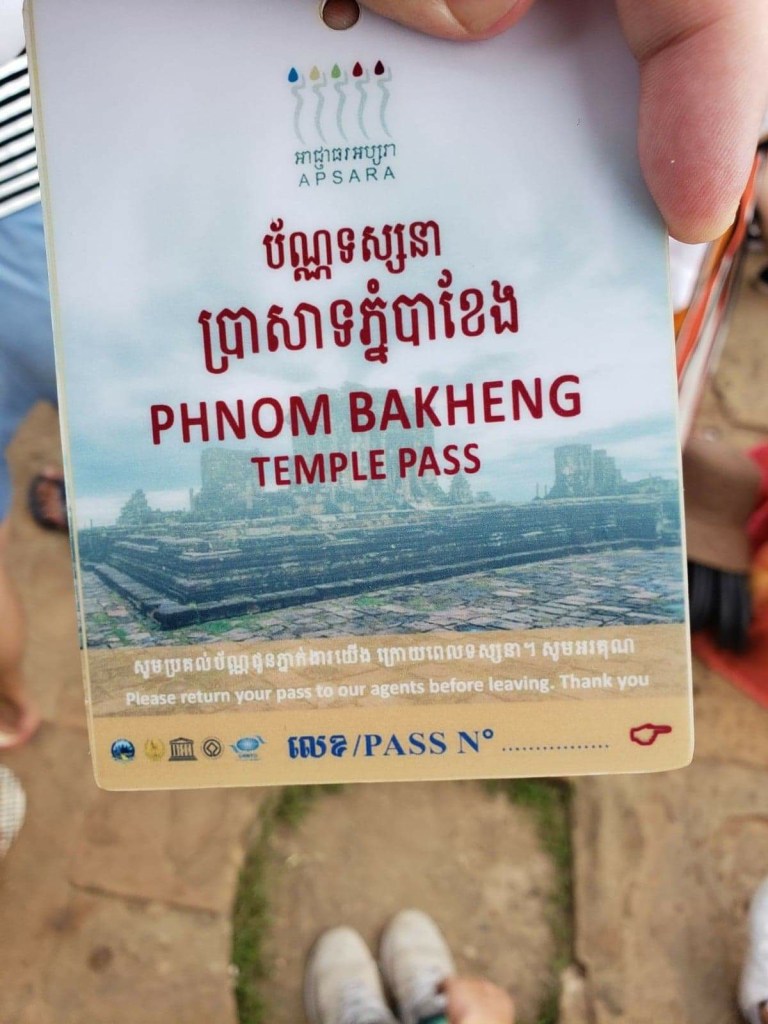
Because the site is protected, only a limited number of tourist are allowed to the top of the temple, partly this is to protect the temple from massive crowds who flock to the site to view the sunset over Angkor Wat, and to protect the crowds from accidently falling off the steep sides of the temple.
The pathway leading up. The mini towers each have an opening for a shrine.
As with many of the Khmer temples, no protective parapet along the edge of each of the tiers. While this keeps the site authentic, it means it’s not handicap friendly.
Views from the summit of Phnom Bakheng. There were several hours of daylight to go, so there several stunning views from the top of the pyramid shaped temple summit.
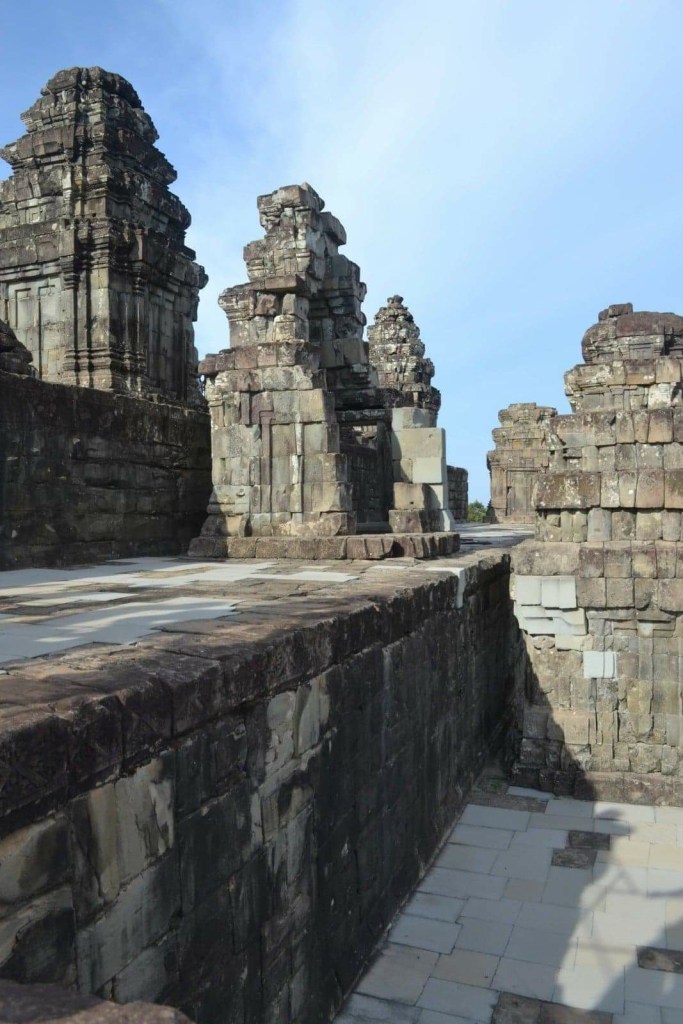
Making my way along the top of the temple, several more towers on the four corners along with the central spire.
The ruins of the central tower which houses the linga enshrined in 907 C.E., the main tower has lost its top spire but the base frame remains intact, with some wooden bracing for support. There isn’t much shade at the top, so the space is quickly filled as several visitors settled in for a long wait to catch the sun set.
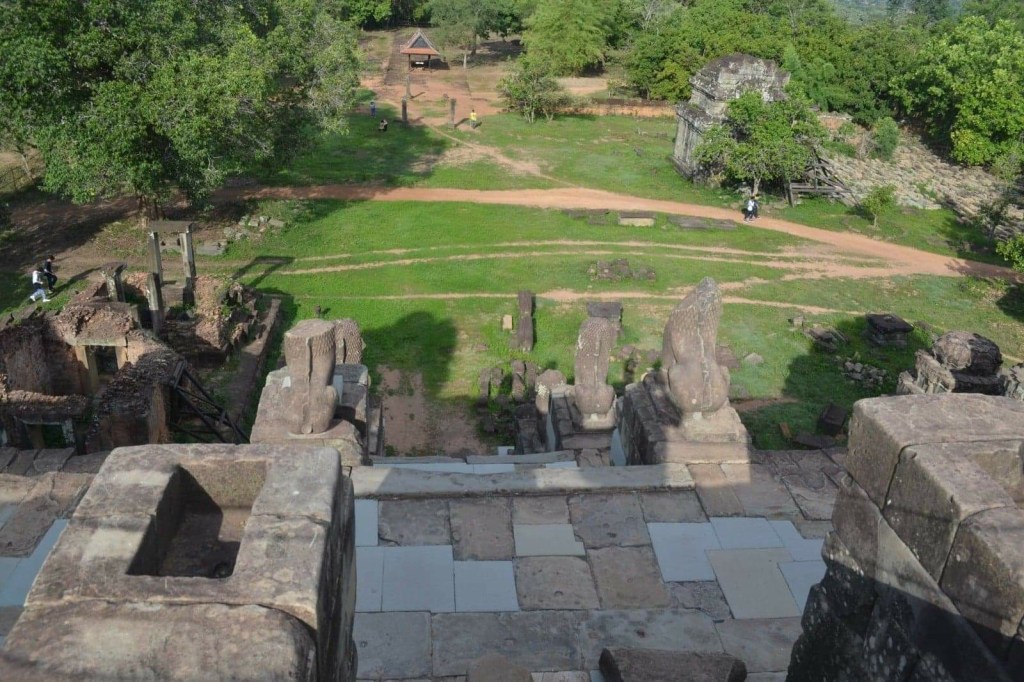
Looking to the east, to the main entrance in the original configuration. The temple would have been enclosed by a perimeter wall and moat. A few surrounding ruins of the out buildings remain standing.
The outer enclosure surrounded the base of the hill where a moat was also constructed. Four laterite and sandstone gopuras in the cardinal points were once standing but only the traces of their foundations remain. The main entrance was to the East, where a stone encased stairway lead to the temple’s inner enclosure. There are only traces of this and other stairways leading from the North and South entrances. The western gopura and stairway appears to have never been completed, though the modern trek to the summit leads up from east, around the north side of the hill and reaching the summit from the south west.
Several areas from the eastern approach were roped off, but can be seen from high up on the top level of the temple.
A splendid view of Angkor Wat in the distance.
The sun starting to cast a golden hue onto the towers of Angkor Wat. Phnom Bakheng is a popular place for viewing the sunset over Angkor Wat. Because of the limited number of passes allowed to reach the top, the queue waiting at the base was observed to be anxiously waiting for solo visitors to hurry it up and let them have a turn.
The modern city of Siem Reap can be seen beyond the ruins. While close to the historical park is protected, the encroachment of modern development risks spoiling the view.
Don’t mind me as I play with the camera and play with the focus. This one turned out the best.
Waiting for the sunset, many are already taking refuge in the shade.
One of the more familiar images of Khmer stone art, are the many Asparas and Devatas in the bas reliefs. Each one is unique, and adorn the walls of nearly all of the Khmer ruins I have visited.
More fun with the camera lens.
While it might not be much to look at now, the central tower housed the linga, which now is a Buddha shrine. Many of the Hindu temples were repurchased as Buddhist ones over the course of the centuries.
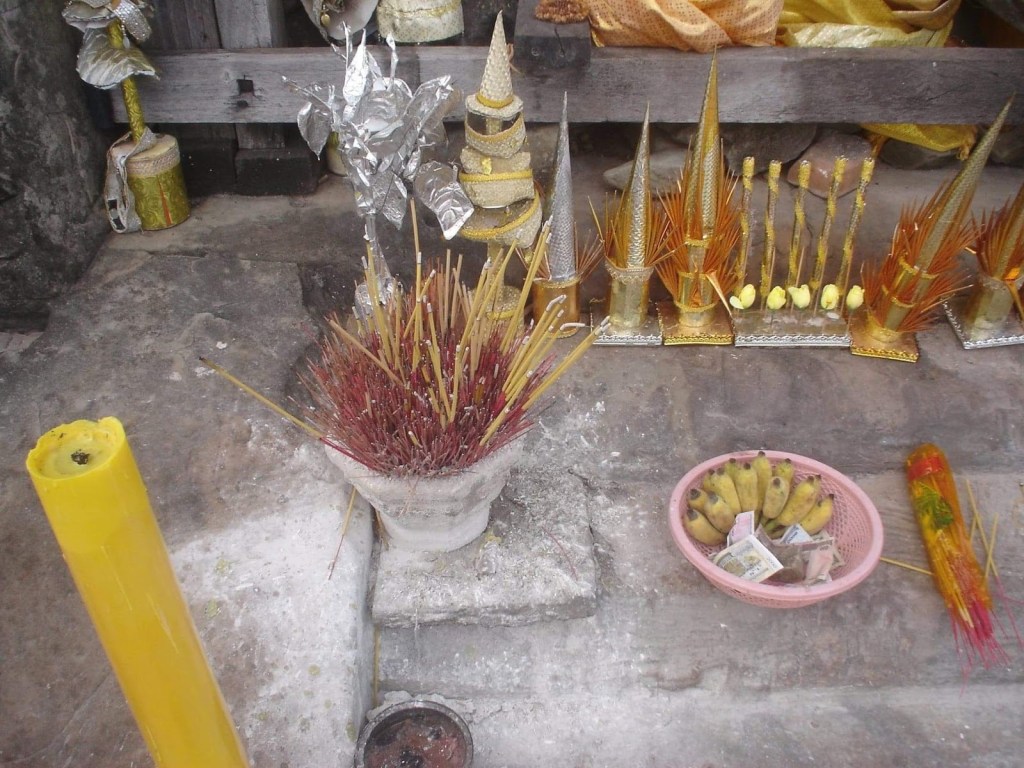
The days offering to the temple for a small rental fee, some incense sticks are provided.
Phnom Bakheng has its share of preserved stonework which shows the skills of the ancient artist. Even in the ruined state of the temple, the intricately cut stone work still impresses me.
When to Visit
The preferred times in the guide Ancient Angkor list the best times for viewing the temple are sunrise and early part of the day, and close to sunset for viewing Angkor Wat from the summit.
I have had the pleasure of visiting many Angkorian sites in Thailand before having made the trip to Cambodia, so I was fairly familiar with what I would see during my visit. While the guide books list Phnom Bakheng taking up to an hour to tour, which includes the time to hike up to the monument, I was content to be scampering around for several hours until it started to get dark.
I would rank this temple as a high priority for anyone with knowledge of the history of the Angkor Empire, and not simply stopping by for the stunning views of Angkor Wat below. But to my regrets it seemed that most of those who came to the temple quickly plopped down in the shade to wait for the sunset.
Architecturally speaking, because of the state of the ruin, it doesn’t offer much to see that couldn’t be observed elsewhere. It would be hard to expect everyone to be versed on the architectural changes and artistic esthetics that changed over the course of the Khmer Empire, I am still learning as I go. The three must must see temples on everyone’s list are: Angkor Wat, the Bayon, and Ta Prohm, but for me, time permitting, I would visit every single ruin in the area.










 Lost in Linklandiya
Leave a comment